A tale of two uranium models: EPL 9727 and EPL 8208
July 2, 2026
EPL 8617 is one of those licences that jumps out from the map, covering 10,492 hectares and sitting in a proven uranium district.


Nathan Chutas, PhD, CPG
CEO and Director
Skeleton Coast Uranium Corp.
April 20, 2026
You can find uranium stories all over the global map. What is harder to find is a jurisdiction where uranium mining is already proven at scale.
Namibia is one of those places — and it matters more than people think.
In mining, good grade, on its own, is not enough. You want a jurisdiction with a track record, with existing mines, with roads, port access, power and a regulatory environment that understands what the industry actually requires.
Namibia has all that, and more.
Namibia is already one of the most important uranium-producing countries in the world. In 2024, the country was the world’s third-largest uranium producer, behind only Kazakhstan and Canada, accounting for about 10% of global mined supply and roughly 8% of total global uranium resources.
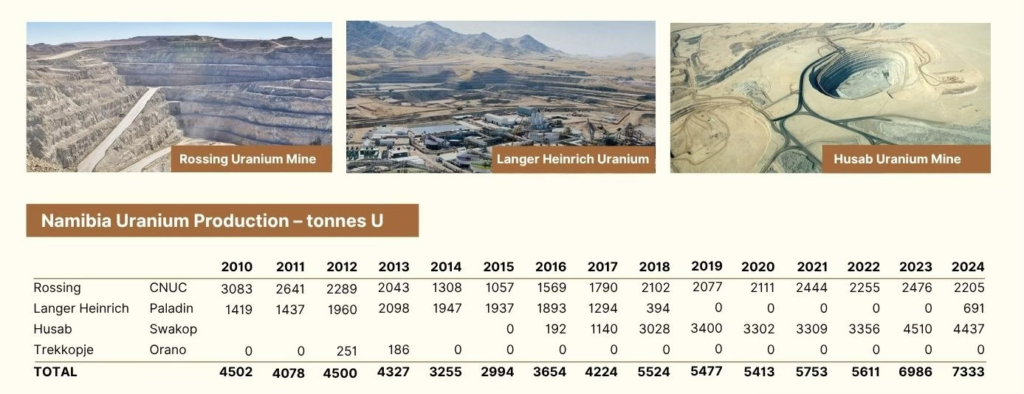
When you look at a map of Namibia’s uranium belt, you are not looking at a frontier concept. You are looking at a proven mining district with deep technical history, real data, and a demonstrated ability to support world-class uranium operations.
Exisiting mines do more than just validate the geology, they support ecosystems, from skilled worforces to logistics networks, policy frameworks to service industries — all critical building blocks for any explorer, like Skeleton Coast, who wants to efficiently translate exploration success into long-term project development.
And Namibia also has a strategic Atlantic coastline with the port of Walvis Bay as the country’s principal port, supported by a network of well-maintained tarred roads extending across the region. Importantly, the port is closer to North America and Europe than any South African port.
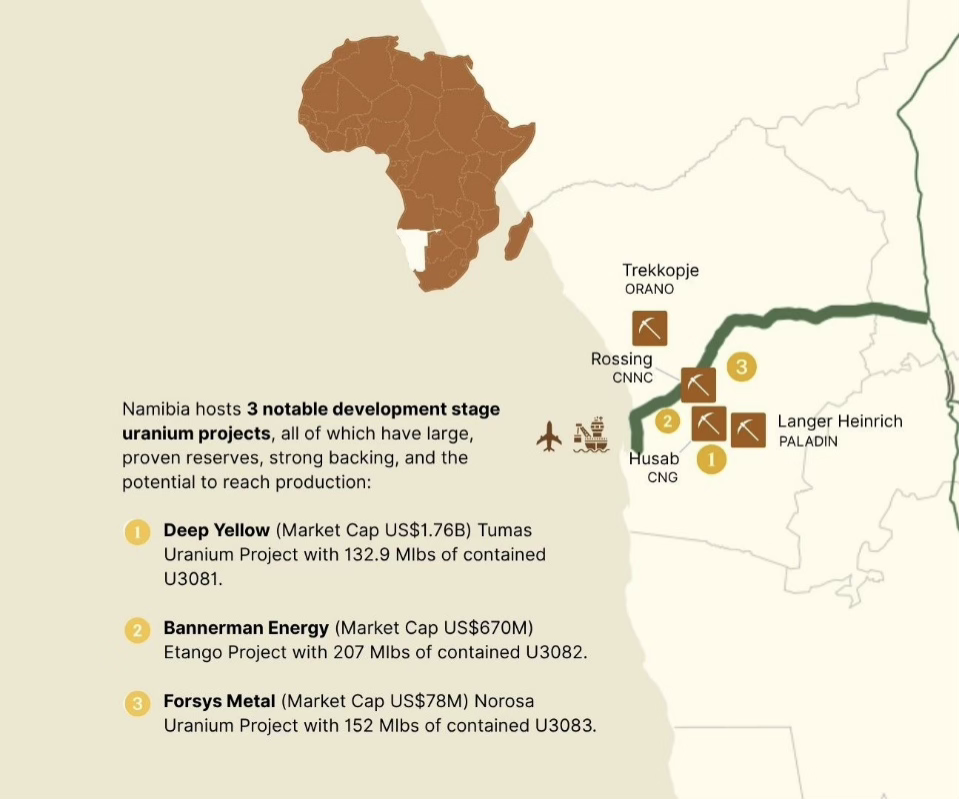
That matters for equipment, supplies, people, and, eventually, exports. It is one thing to have geology. It is another to have a route to market. Namibia has both.
Of course, no jurisdiction is perfect, and any serious company has to respect the realities of permitting, water, power, and community engagement. But from our standpoint, Namibia stands out as a country where mining is understood, where uranium is already part of the economic base, and where the path from exploration to development has an established pipeline.
Timing also matters. The uranium market today is shaped not just by price, but by a broader shift in how governments and utilities secure supply, including diversification, resiliance, and geopolitical alliances.
That is why Skeleton Coast chose Namibia: to build in a jurisdiction with the right rocks, the right history, the right policy framework, and the right strategic relevance.