Projects
Exclusive
Prospecting Licenses
Learn About Our Projects
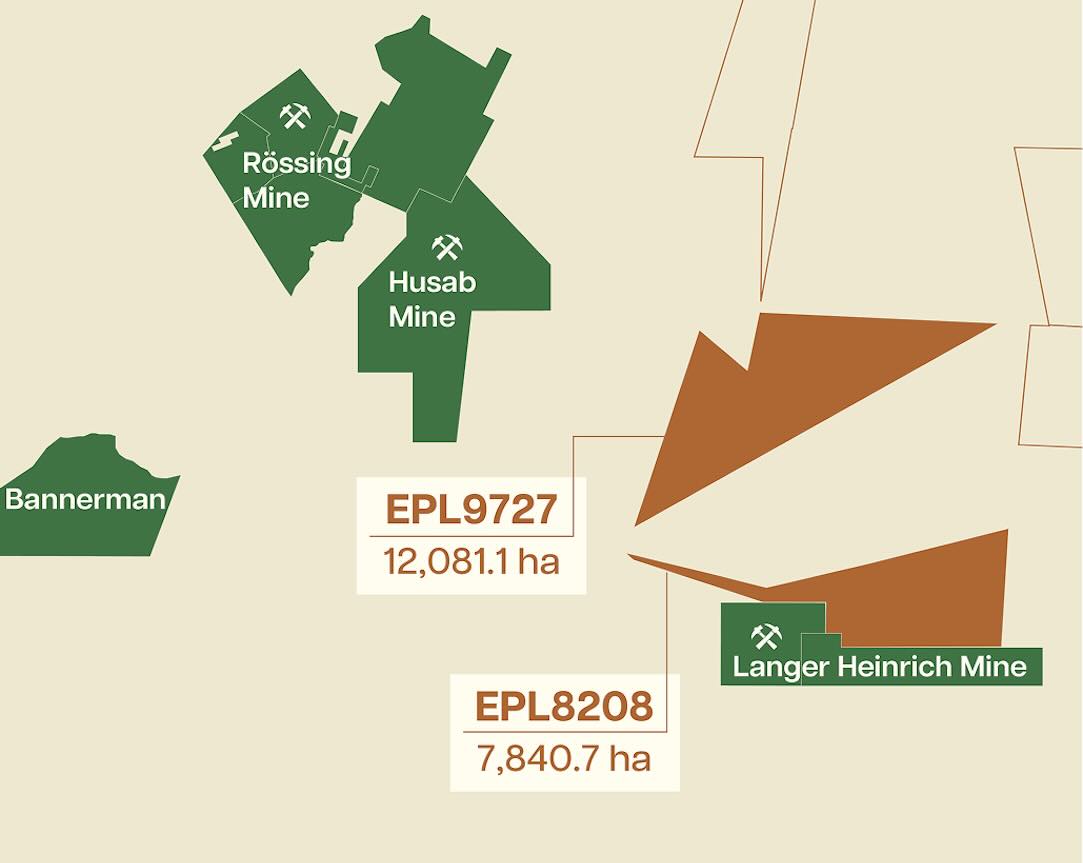
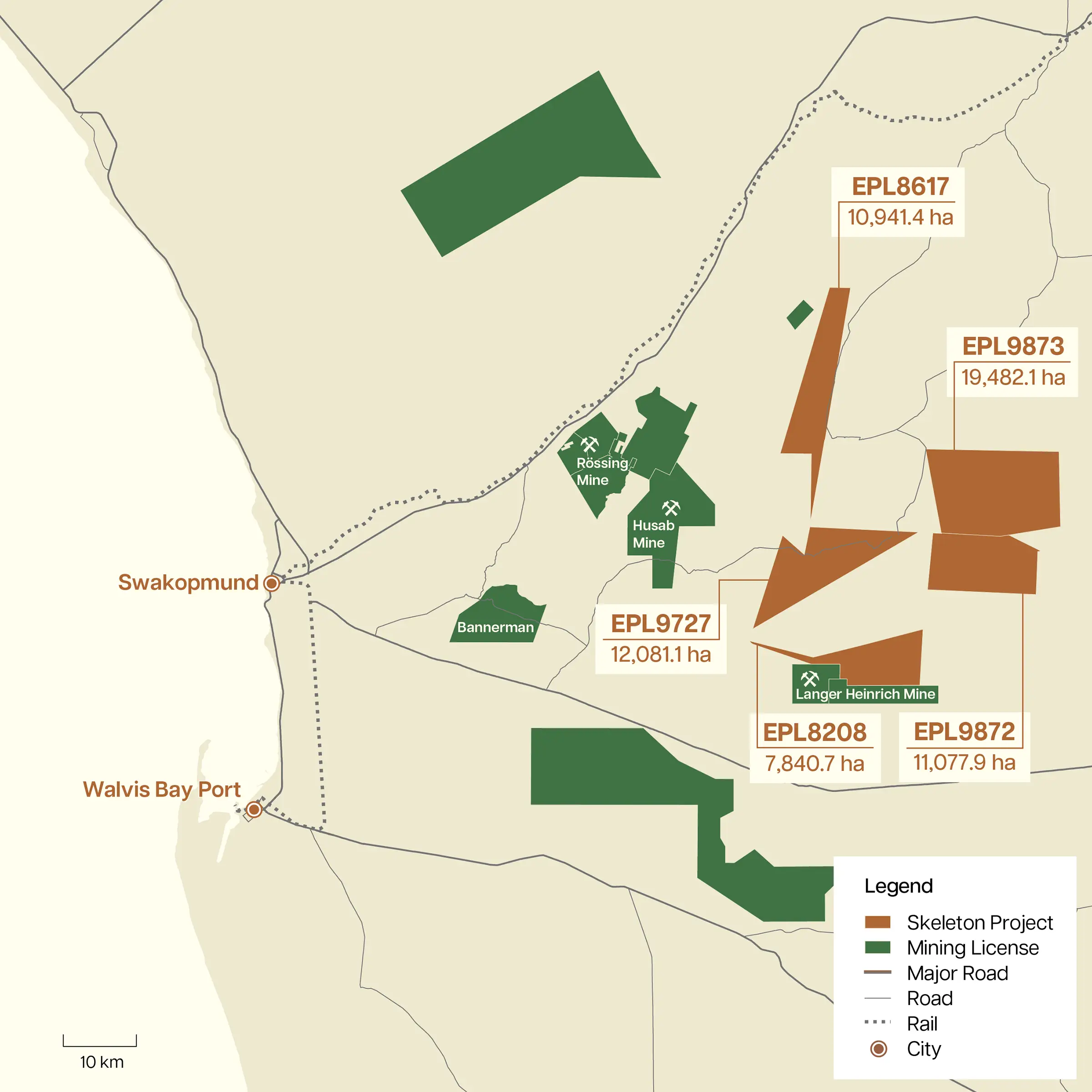
EPL 8208 and EPL 9727
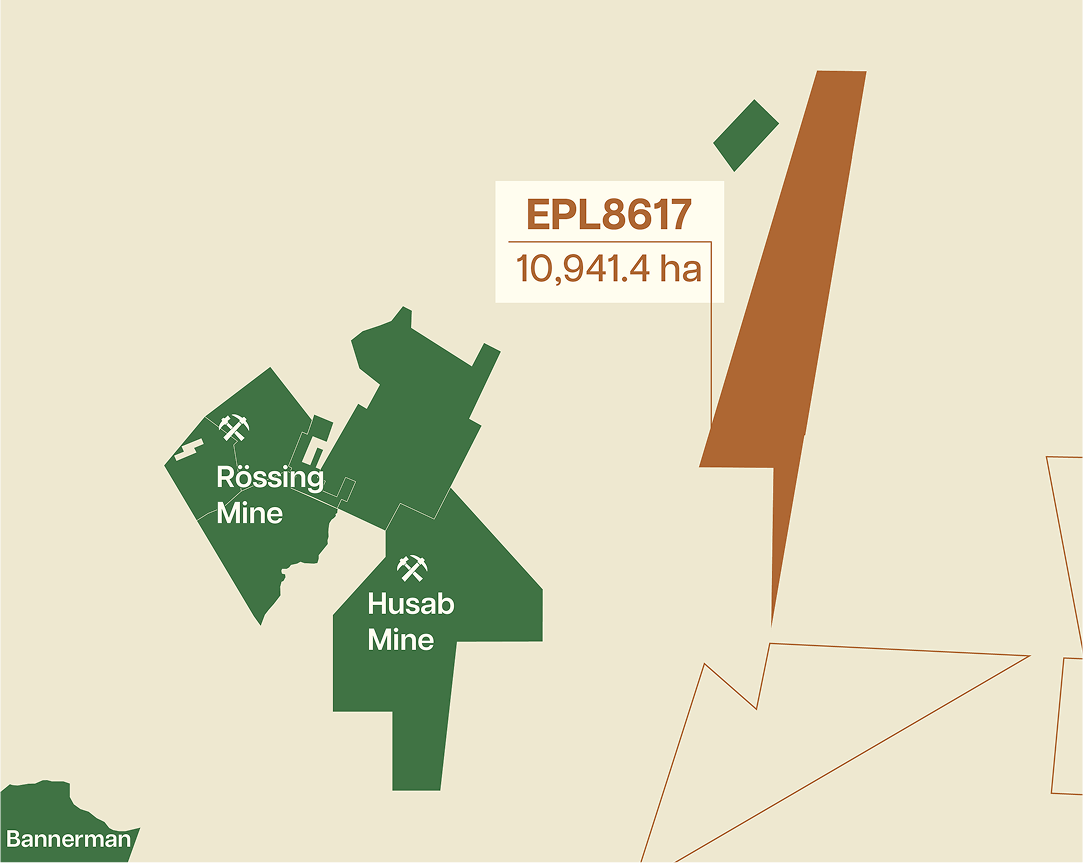
EPL 8617
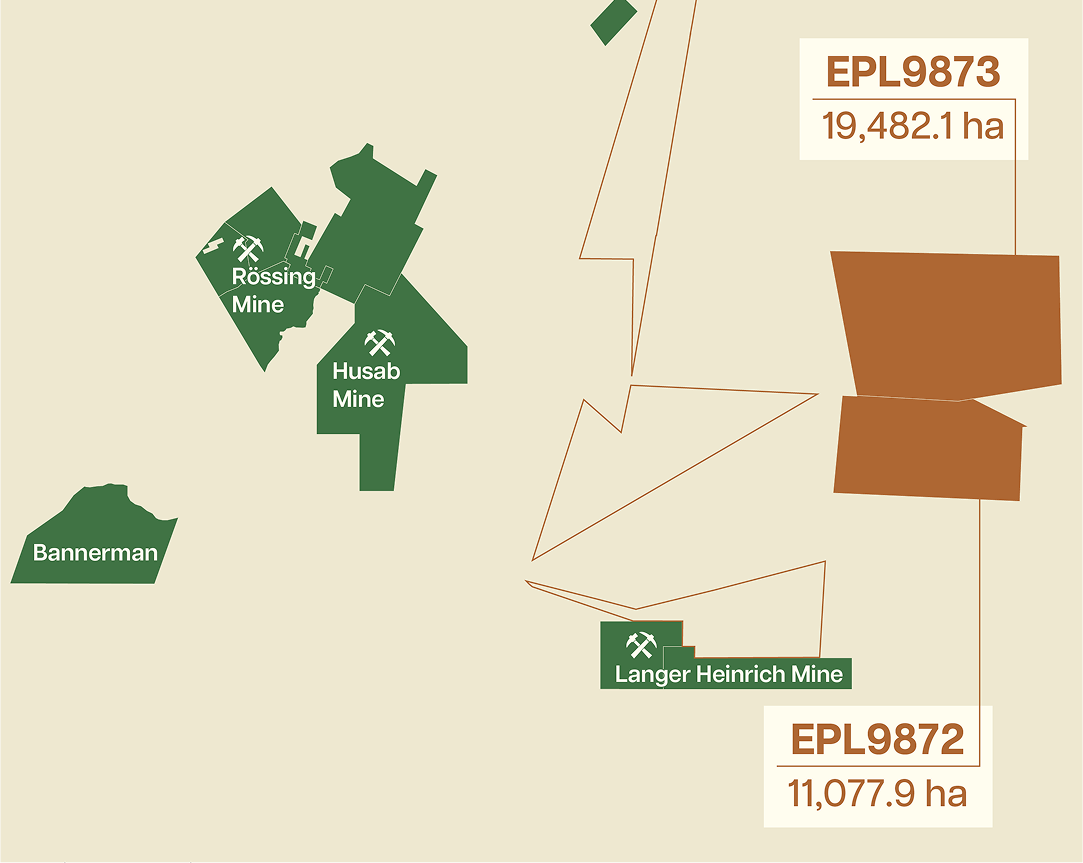
EPL 9872 and 9873
EPL 8208 and EPL 9727
EPL 8617
EPL 9872 and 9873
Exploration Program
01.
02.
03.
04.
01
02
03
04
05
06
Namibia
Namibia contains significant uranium resources including ~1.5 Bil pounds in the Measured and Indicated Resource category and ~350 Mil pounds of Inferred Resources1. Uranium resources in the Erongo Region occur within a north-south corridor which is approximately 200 km in length and 65 km wide.
Palaeochannel/calcrete-type uranium mineralisation which occurs in Tertiary and Quaternary sediments filling ancient river valleys that drained the uranium rich hinterland. These types of uranium deposits are significant surficial, secondary deposits formed in arid to semi-arid climates such as Namibia.
Basement/alaskite-type uranium mineralisation which is currently mined at Rössing and Husab uranium mines. These types of uranium deposits occur in granitic and associated rocks of the Damaran or Pan-African orogenic belt forming the basement of the region.
Namibia is a highly-supportive mining jurisdiction, with excellent infrastructure and favourable conditions for exploration, development and mining. The country hosts world-class uranium mining operations including Rössing – 11 Mlb pa design, Husab – 15 Mlb pa design and Langer Heinrich – 5 Mlb pa design.
Namibia is currently undergoing a uranium resurgence with the potential to advance the country’s position as the world’s 3rd largest uranium producer. Namibia is a recognised tier-one supplier to global utilities. Uranium currently mined and processed in the Erongo Region of Namibia is being used in nuclear power plants in the U.S., Europe and Asia, and is supporting the global energy transition to a low carbon future.
Namibia offers a stable, mining-friendly jurisdiction which enables the country to develop and operate complex uranium projects at scale. The country’s uranium projects and operations benefit from well-developed infrastructure, including:
- regional power grid;
- desalinated water supply (via pipeline from the coast) support mining in the Namib Desert;
- the deepwater Port of Walvis Bay provides an Atlantic shipping gateway to export uranium oxide (“U₃O₈”) to North America, Europe, and Asia;
- skilled local workforce with decades of experience in uranium exploration and mining; and
- a pro-mining regulatory regime with well-defined pathways for permitting, environmental approval and community relations.